Mega Menu
Mega menu is possible in BS5 but we will need to create a custom template layout for the navigation widget. The following is a hard-coded example.

Font Awesome 6
FA6+ icons will work on all widgets.
The FMH Icon box will need a new version created because the styling is broken in Bootstrap 5 templates (this has nothing to do with FA).
FMH Icon Widget
Icons can now be used in Content blocks by pasting the HTML tags from www.fontawesome.com into the HTML editor.
Here are some new icons from Font Awesome 6
face-awesome
envelopes
wheat-awn
Bootstrap Components
Code snippits from http://getbootstrap.com pasted into Content Blocks.
h1. Bootstrap heading
h2. Bootstrap heading
h3. Bootstrap heading
h4. Bootstrap heading
h5. Bootstrap heading
h6. Bootstrap heading
Nav Tabs
Nav Pills
Accordion
.accordion-body, though the transition does limit overflow.
.accordion-body, though the transition does limit overflow.
.accordion-body, though the transition does limit overflow.
Tables
| # | First | Last | Handle |
|---|---|---|---|
| 1 | Mark | Otto | @mdo |
| 2 | Jacob | Thornton | @fat |
| 3 | Larry the Bird | ||
Alerts
Image Carousel



Modals
Sitefinity Widgets
Default, out of the box, Bootstrap 5 templates available for widgets.
The navigation template used above is called Horizontal.
Navigation Widget - Tabs Template
Navigation Widget - Pills Template
Breadcrumb

List Widget - Expandable List Template
Precision Claims FAQs
List Widget - Simple List Template
Crop Claims Reminders
-
How To Report MPCI Claims
-
MPCI Claim Reporting Deadlines
-
Appraisals
-
Production Records by Unit
-
Production Delivered to a Commercial Elevator
-
Production From Precision Farming Technology Systems
-
Production Weighed and Farm Stored
-
Authorization for Load Records, Storage Structure Marking, or Combine Monitor Records
-
Fed Production
-
Quality Adjustment
-
What is a Simplified Claim?
-
What can insureds do to expedite the claim process?
List Widget - Anchor List Template
Quality Control Review FAQ
- What can an Insured do to prepare for a review?
- What can Agents do to prepare for a review?
- How does the review process begin?
Quality Control Review FAQ
What can an Insured do to prepare for a review?
Third party documentation (i.e. summary/settlement sheets from the elevator) is required when applicable and available. Insureds are expected to have available hard copy records that will 1) support the total production raised for the crop/county/year being reviewed and 2) that can demonstrate how production was kept separate between various units, practices and types (if applicable).
Insureds will also want make themselves available to meet with the quality control reviewer as the reviews will need to be completed before the claims can be processed.
What can Agents do to prepare for a review?
How does the review process begin?
Documents List - Documents List Template
Documents List - Documents List Template
| Title | Type | Size | |
| 4100 KB | DownloadCLIP_Brochure_2025 | ||
| jpg | 83 KB | DownloadCrop-and-Livestock-Income-Protection | |
| 1053 KB | DownloadECOplus_Brochure_2026_TRIFOLD | ||
| 1107 KB | DownloadSCOplus_Brochure_2026_TRIFOLD | ||
| 491 KB | DownloadFMH MHC Letter Combined |
News Widget - News List Template
News list template is the only template available by default.
2026 ECO & SCO Highlights by Region
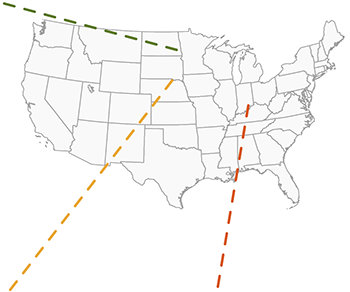
Here’s a regional look at how ECO and SCO are shaping discussions from our FMH InsureCast speakers out in the field.
Northern Plains In North Dakota and northern Minnesota, ECO and SCO discussions are shaped by weather volatility, prevent plant exposure, and crop diversity. Market pressure is adding urgency to coverage decisions. Andrew Sather, FMH District Sales Manager in the Northern Region, notes that economics are front and center. “Not many crops look very good on paper right now,” Sather said. “That makes insurance decisions even more important as producers look for ways to manage both price and production risk.” Sather also emphasized the importance of understanding Final Area Yield calculations, especially for specialty crops. “Your expected county yield for SCO and ECO may not reflect actual county yield if acres are limited,” he explained. “That’s a critical conversation for agents to have so expectations are aligned.” |
| |
Central Plains & Western States In Nebraska, Kansas, and surrounding states, SCO continues to be a cost-effective option—particularly in areas where yield losses tend to be severe rather than incremental. Landon Shafer, FMH Strategic Account Manager in Nebraska, says protecting margins is the priority. “Our biggest concern isn’t whether we can raise bushels, but whether we’ll have margin at the end of the day,” he explained. “SCO can play a big role in covering deeper losses when things don’t go right.” While ECO has generated interest, its fit often depends on crop mix and liability concentration. “If producers have to spend their premium dollars somewhere, many are choosing county-based plans that trigger by crop rather than farm-wide coverage,” Shafer added. Sather added, “Crop insurance isn’t static. It changes every year.” For 2026, ECO and SCO remain central pieces of the risk management puzzle. | Midwest & Eastern Corn Belt Across Indiana, Ohio, Illinois, and Kentucky, ECO adoption continues to increase. With added premium support, many producers are using ECO’s 86%–95% band to protect operating margins rather than catastrophic loss. Billy Meade, FMH Sales Development Manager for the Eastern Region, says growers are focused on preserving equity. “When you think about what ECO does on that high band, farmers are really trying to protect that profitability margin, the equity they have invested in the field,” Meade said. SCO also remains an important tool, particularly for growers carrying lower underlying coverage levels or coordinating ARC and PLC decisions. With SCO now no longer tied to ARC, agents have greater flexibility. “This is a unique opportunity to cover different layers of risk without forcing producers into an either-or decision,” Meade added. |
Key Takeaways for Agents
- ECO and SCO affordability has improved. Use that to reframe conversations around protecting margins, not just yield loss.
- Area plans work best when farm performance aligns closely with county results.
- SCO remains especially valuable in regions prone to deep losses or where underlying coverage is lower.
Blog Posts Widget - Blog Posts Lists Template
-
Reporting Acreage with FMH Precision Solutions
Many policyholders already collect precision ag data during planting. Put that data to work to report acreage for crop insurance with FMH Precision Solutions.Full story -
Prepping Your Customers for Planting with Precision
Help your farmers use the precision data they're already collecting to simplify planting and reporting this spring.Full story -
Q&A with an FMH Precision Tech Specialist
Learn how our expert staff supports agents getting started with Precision SolutionsFull story -
Traditional vs. Precision Claims: What Are the Differences?
Oct 16, 2023, 14:01 by Eric RicheLearn how Precision Solutions can lead to simplified claims and easier APH reviews for your customers.Full story -
See How Precision Solutions Saves Premium and Improves APH
See the difference with examples from our recent FieldView™ Partner Connect webinar.Full story