01
Save Your Report
If you’re using a paper version, scan or take a picture and save your completed calibration report to your computer or phone. You can also complete our electronic calibration report.


Proper monitor calibration is essential when using precision ag data for crop insurance reporting and claims. Learn about RMA calibration requirements, download calibration reports, and securely upload your records in the FMH Policyholder Center.
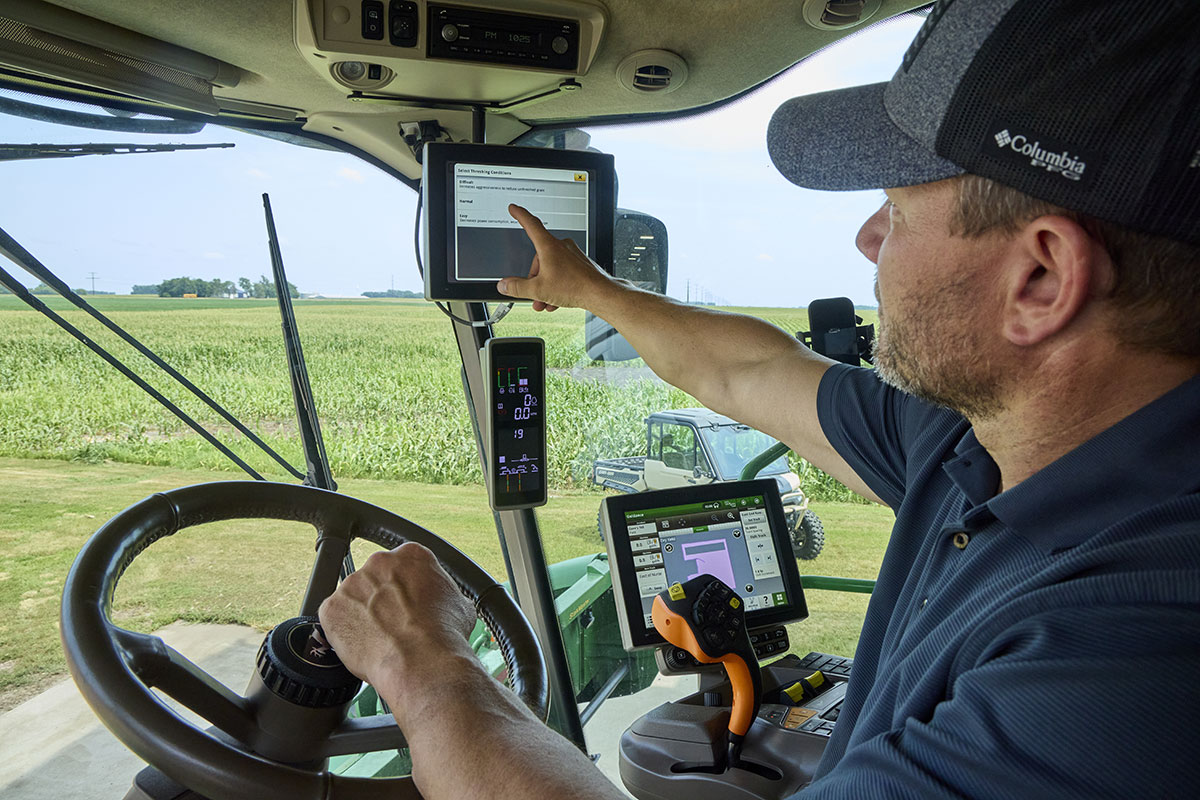
For precision production data to be used for a crop insurance claim, the USDA Risk Management Agency requires yield monitor calibration to be within 3% accuracy.
Records of calibration measurements are required when validating a claim.
How It Works
Once you’ve completed your calibration:
If you’re using a paper version, scan or take a picture and save your completed calibration report to your computer or phone. You can also complete our electronic calibration report.
Log into your FMH Policyholder Center (PHC) account or the FMH Mobile app. Navigate to Precision Solutions > Calibration Report.
Upload your completed report to your PHC account for secure storage and easy adjuster access in the event of a claim. Your agent can also access this record through your account with your permission.
The last calibration needs to be within 3% accuracy. If a farmer has been within 3% for most of the harvest, but the final calibration is outside this threshold, the farmer will no longer qualify for a precision claim.
Each calibration speed must meet the 3% accuracy requirement. At least five calibration speeds should be recorded for production data to qualify for a precision claim.
The farmer must verify the system is calibrating to under the 3% threshold. They must capture the wet weight for a load or region and compare to their scale source per machine.
Calibration Report
To meet RMA calibration requirements, record the following during each yield monitor calibration, regardless of equipment type.
Best Practices
Follow these general recommendations to help achieve the most
accurate calibration results.
View our 1-page Calibration Checklist for a printable version of calibration requirements and recommendations.
Before calibrating, be sure the grain tank and auger tube are completely empty. Be sure that the weigh wagon or truck hauling grain away from the combine is also empty.
Calibrate moisture sensors when harvest season is underway.
Initially calibrate the mass flow sensor at the beginning of the season for each crop, then calibrate as needed.
Re-calibrate as crop conditions change significantly over the season (e.g., crop dry-down, test weight, variety/hybrid change, crop field conditions change).
Calibration loads should be similar in size to the manufacturer's selected weight.
Use the same weight scales throughout the calibration process.
Have equipment-specific questions? Contact your equipment manufacturer or dealer.
We recommend uploading a copy of your calibration reports to your FMH Policyholder Center (PHC) account. All your precision records are then easily available in the event of an APH review.
No. Calibration reports can be shared between entities. The same report can be uploaded via the FMH Policyholder Center for each account. Please remember that final calibration for each combine needs to be within 3% accuracy for RMA requirements.
When combines are calibrated accurately, they are more reliable when compared to measuring several bins, bags, or other farm-stored structures. The harvest wet-weight maps and calibration records fulfill RMA verification requirements.